Beyond Weight Loss Percent: Key Factors Associated With SMM Preservation in an Obesity Care Program
- Enara Health , San Mateo, CA, USA
Background
As comprehensive obesity treatment evolves, it is crucial to identify metrics beyond percent weight loss that distinguish the effectiveness of different programs or care models. This study explores factors associated with skeletal muscle mass (SMM) preservation during a comprehensive obesity management program.
Methods
A retrospective cohort study was conducted with adults enrolled in an obesity management program who presented for body composition measurements at program start and 12 months. High-performing participants were defined as those with a SMM loss to weight loss ratio of ≤5% and compared to those with a ratio ≥20%. Baseline cardiometabolic factors, BMI, age, days on anti-obesity medication (AOM), number of exercise appointments, and average daily step count were compared between the groups.
Results
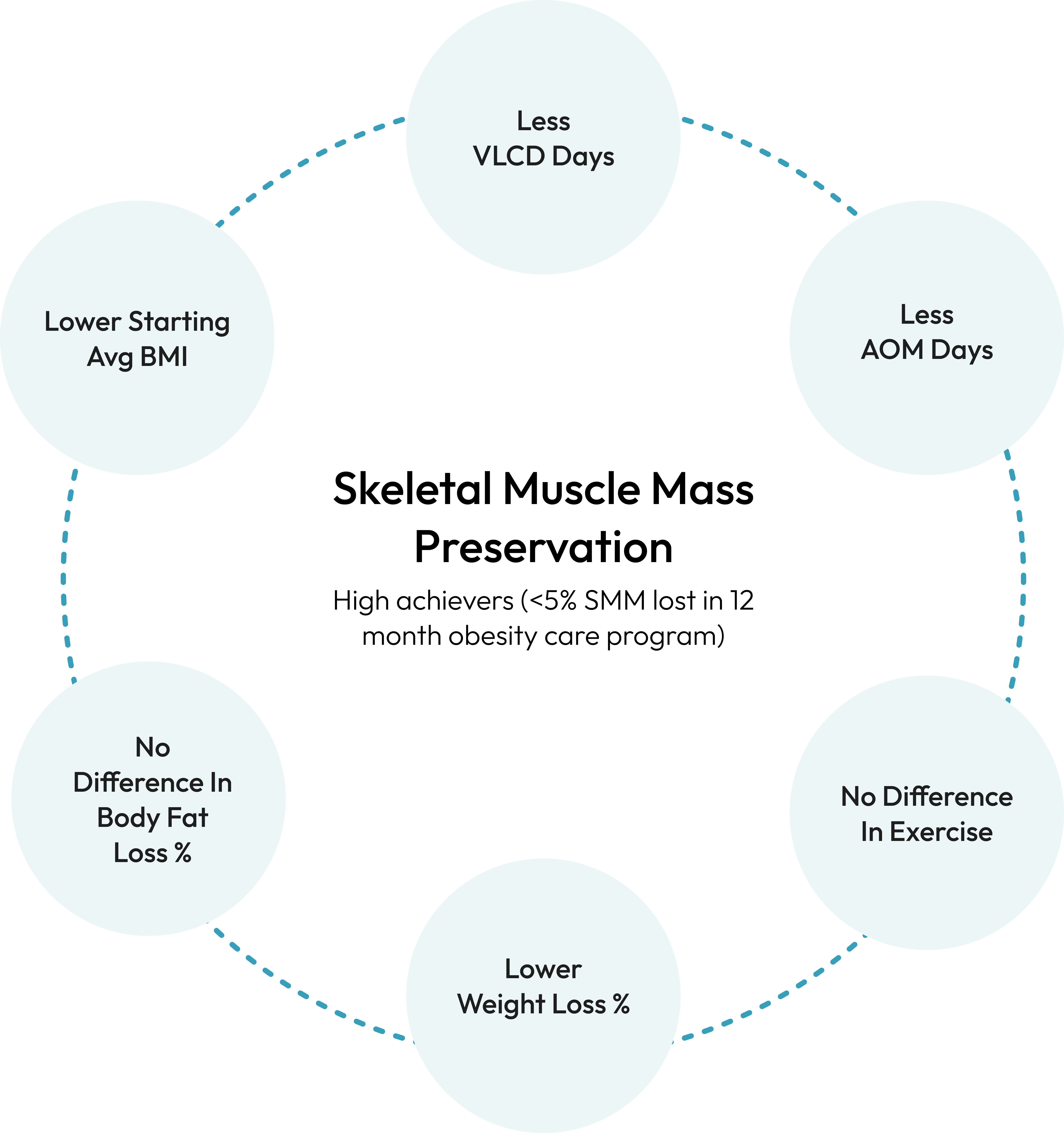
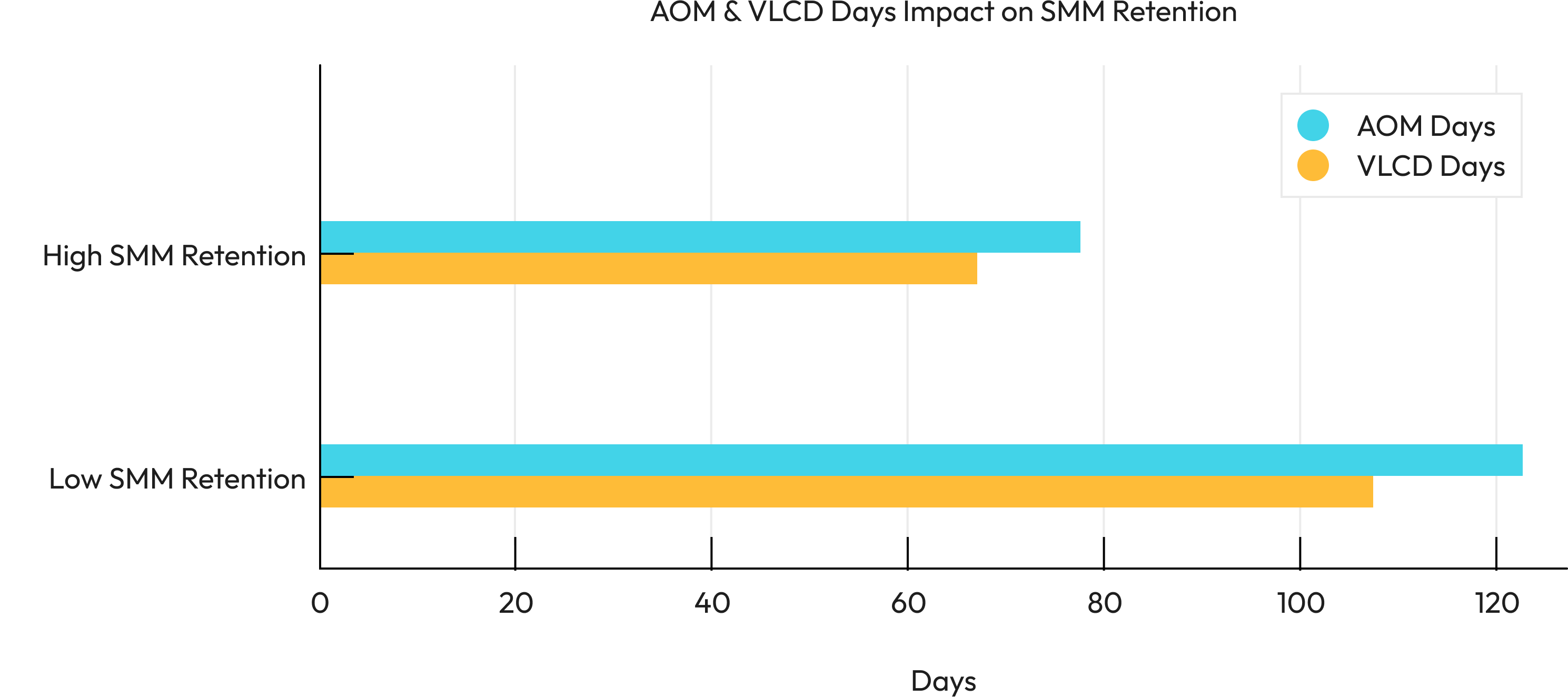
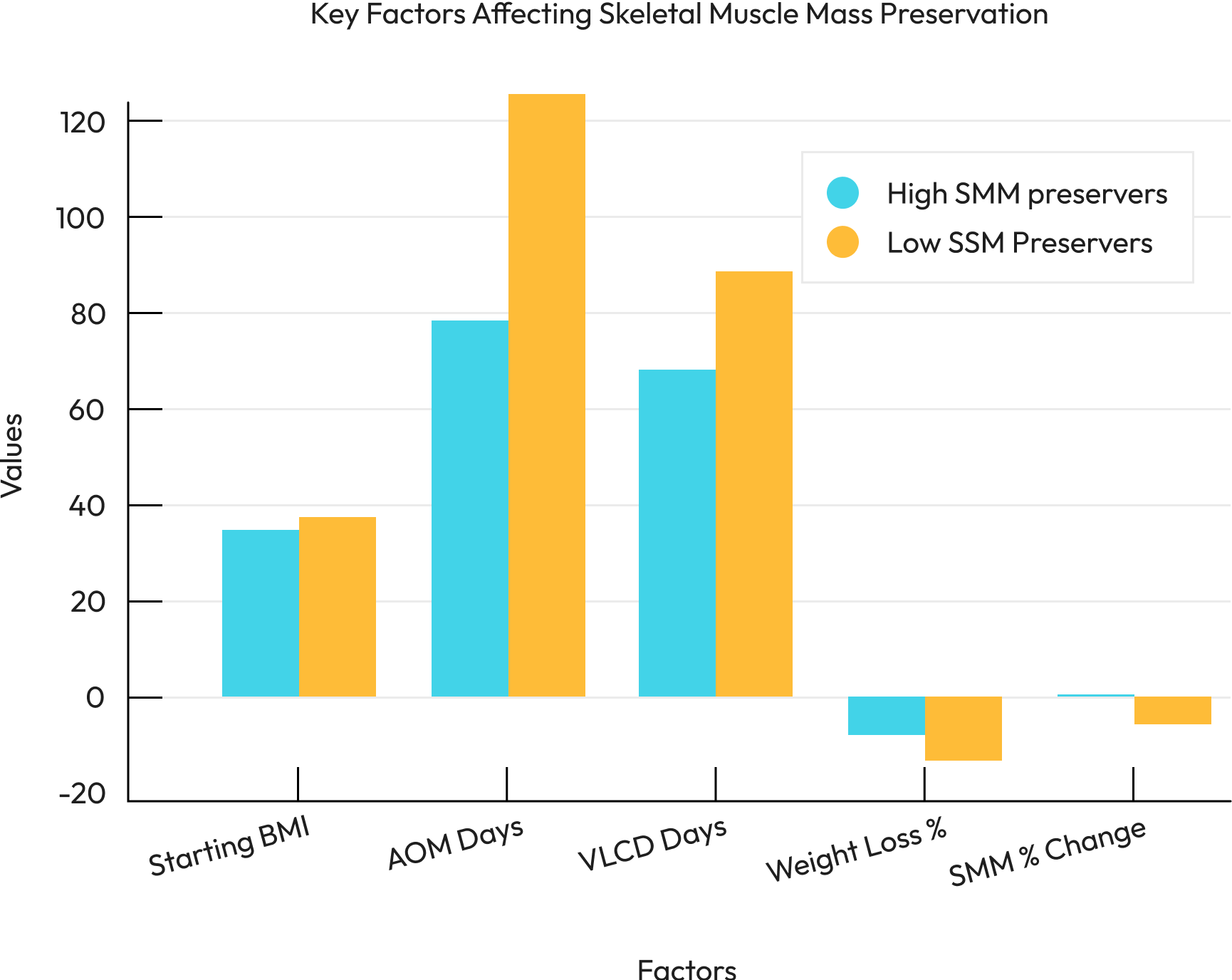
481 participants recorded body composition measurements at baseline and 12 months, with average starting and ending weights of 100.85 kg ± 22.17 and 87.78 kg ± 19.78, respectively. 69 participants qualified as high achievers. High achievers had statistically lower starting BMI (34.76 vs 37.45, P=0.02), fewer AOM days (78.22 vs 124.99, P=0.01), and fewer VLCD days (68.00 vs 88.27, P=0.014). They experienced less weight loss percentage (-7.52% ± 5.92 vs -12.94% ± 7.41, P<0.001) but did not differ significantly in percent body fat change (-18.81% ± 14.15 vs -22.12% ± 14.40, P=0.15), while achieving superior percent SMM change (+0.89% ± 1.45 vs -6.15% ± 4.00, P<0.001). Age, average daily step count, and exercise coaching appointments did not differ significantly between the groups. Percent cardiometabolic improvements from baseline were non-significantly superior in high achievers.
Conclusion
This study highlights that differences in dietary and pharmacological intensities, rather than exercise appointments and step counts, were associated with skeletal muscle mass (SMM) preservation during weight loss. This indicates that SMM preservation strategies should extend beyond physical activity. These insights provide a deeper understanding of sustainable obesity management, emphasizing that percent weight loss alone is not a sufficient metric for success.