Impact of Medicaid vs Commercial Insurance Status on Weight Loss Outcomes With and Without AOMs
- Enara Health , San Mateo, CA, USA
Background
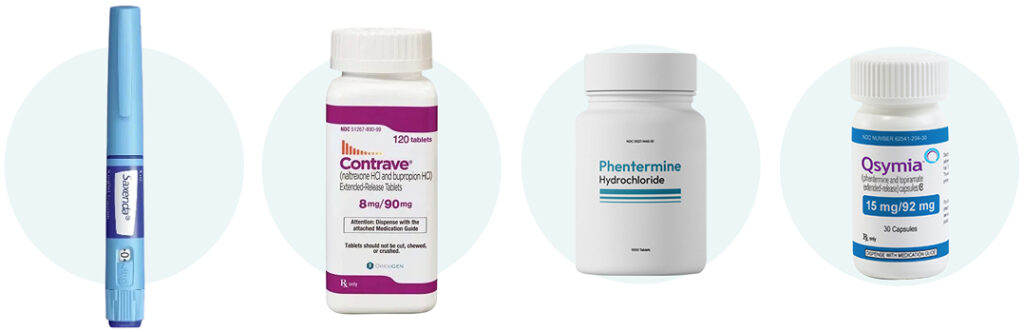
Prior research highlights differences in access to and efficacy of obesity treatments across socioeconomic and racial groups. This study examines weight loss outcomes in an obesity management program, comparing adults with Medicaid insurance to those with commercial insurance, both with and without anti-obesity medications (AOMs).
Methods
A retrospective cohort study was conducted with adults enrolled in an obesity management program. Participants were divided into 12-month and 18-month cohorts. Within each cohort, those with Medicaid insurance were matched with those having commercial insurance using propensity score matching. The matching ratio was 1:2 for the 12-month cohort and 1:4 for the 18-month cohort, based on demographic variables (age, gender, BMI), cardiometabolic laboratory values, and AOM usage. The primary outcome was the percent change in baseline weight at 12 and 18 months.
Results
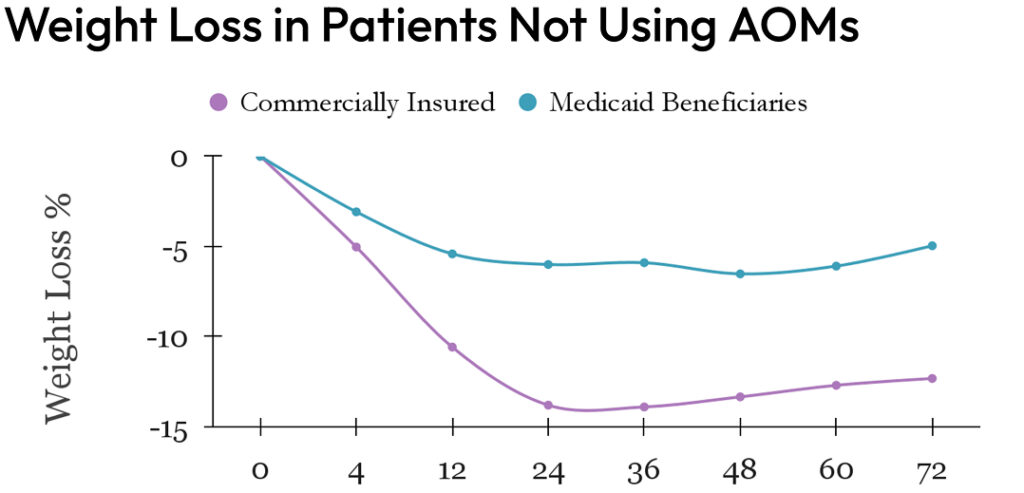
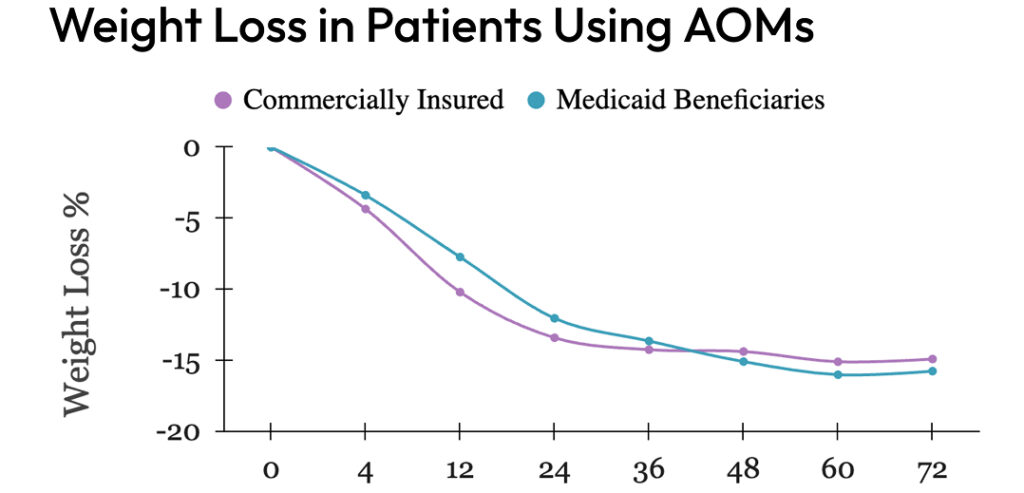
In the 12-month cohort, Medicaid participants (n=119) lost significantly less weight than those with commercial insurance (n=270): 9.28% vs. 12.63%, p<0.001. In the 18-month cohort, similar trends were observed: Medicaid (n=57) vs. commercial (n=238): 9.81% vs. 13.19%, p=0.02. Among AOM users, weight loss outcomes were similar between Medicaid (n=67) and commercial insurance (n=158) groups in the 12-month (11.72% vs. 13.52%, p=0.14) and 18-month cohorts (15.77%, n=30 vs. 14.87%, n=150, p=0.67). Non-AOM Medicaid participants (n=52) consistently lost less weight than their commercial insurance counterparts (n=112) in the 12-month (6.7% vs. 12.11%, p<0.001) and 18-month cohorts (4.98%, n=27 vs. 12.46%, n=88, p<0.001).
Conclusion
This study highlights significant disparities in weight loss outcomes between Medicaid and commercial insurance participants in an obesity management program, consistent with existing literature on healthcare disparities. Notably, the use of AOMs helps ameliorate these disparities, underscoring their critical role in achieving equitable health outcomes. These findings emphasize the need for policy interventions to enhance access to effective weight-loss medications for Medicaid populations. Addressing these disparities is crucial for improving obesity management and ensuring equitable healthcare for all socioeconomic and racial groups.